
Hardwood Refinishing
Can My Hardwood Floors Be Refinished?
Scratched, faded, or worn hardwood floors don't always need replacing. Learn when refinishing can restore their beauty and when replacement makes more sense.
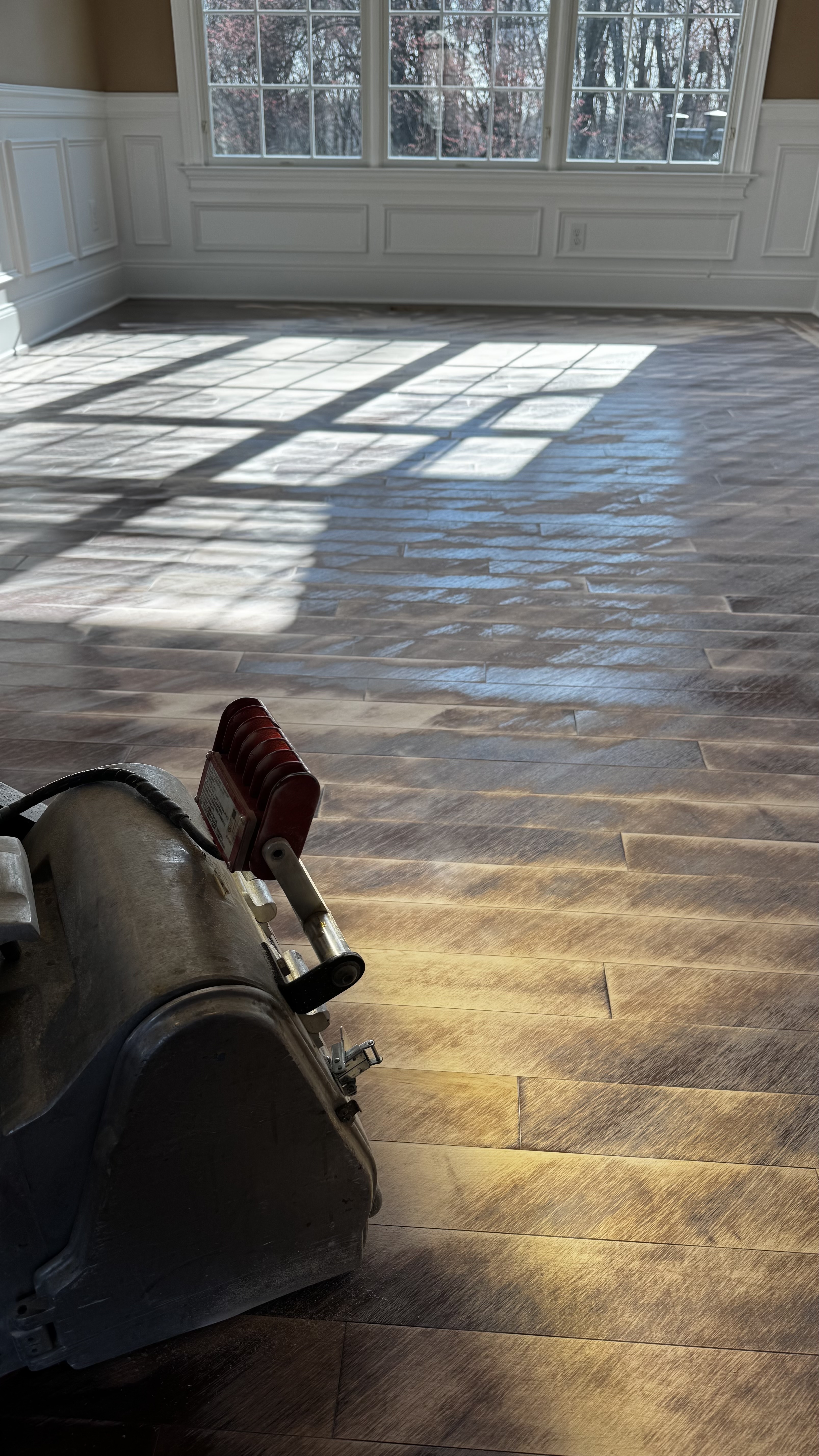
Scratched, faded, or worn-out hardwood floors don't always need to be replaced. In many cases, professional refinishing can restore their natural beauty and extend their lifespan.
The key is understanding your floor's condition, remaining wood thickness, and previous sanding history.
Frequently Asked Questions
How many times can hardwood floors be refinished?
Solid hardwood can often be refinished multiple times. The exact number depends on the wood's thickness, previous sanding, and overall condition.
Can engineered hardwood be refinished?
Some engineered floors can be refinished if their top wood layer is thick enough. Thin-veneer products may not be suitable for sanding.
Can refinishing remove deep scratches and pet stains?
Sanding can remove many scratches, but stains that penetrate deeply into the wood may require individual board replacement.
Can I change the color of my hardwood floors?
Yes! Full refinishing removes the existing finish, allowing you to choose a new stain color that complements your home. Results depend on the wood species.
1. Is Your Hardwood Thick Enough for Sanding?
Solid hardwood generally offers more refinishing opportunities than engineered flooring. However, every sanding removes a small amount of wood, gradually reducing the material available for future restoration.
For engineered hardwood, the thickness of the top wood layer is especially important. NWFA guidelines generally advise against sanding floors with less than approximately 2.5 mm (3/32 inch) of remaining wear layer.
A professional inspection can help determine whether your floors have sufficient thickness for another sanding.
2. Screen & Recoat vs. Full Refinishing
Not every worn floor requires sanding down to bare wood.
If your hardwood has minor surface scratches or a dull finish, a screen and recoat may restore its appearance by preparing the existing coating and applying a compatible new finish.
Full refinishing is generally necessary for deeper scratches, exposed bare wood, significant discoloration, or a complete stain-color change.
The existing finish must be suitable for recoating, so an inspection is important before choosing either process.
3. When Is Replacement Necessary?
Some floors have damage that sanding cannot correct.
Extensive water damage, severe buckling, or insufficient remaining wood may make replacement necessary. Any underlying moisture problem must be corrected first.
However, a few damaged boards don't always mean replacing the entire floor. Individual boards can often be repaired or replaced before refinishing the surrounding hardwood.
More Questions About Hardwood Refinishing
How long does hardwood floor refinishing take?
Most residential projects take approximately 2–5 days, depending on the floor's size, condition, repairs, and finishing products. Additional curing time may be required.
Is hardwood floor refinishing dusty?
Professional dust-controlled sanding equipment significantly reduces airborne dust. At AXO Floors, we also use protective barriers to help keep surrounding areas clean.
When can I walk on my newly refinished floors?
It depends on the finishing products used, temperature, and humidity. We'll provide specific instructions for foot traffic, moving furniture, and replacing rugs after your project.
Final Thoughts
Your hardwood floors may have years of life left, even if they currently look worn or outdated.
At AXO Floors, we help New Jersey homeowners determine whether refinishing, repairs, or replacement is appropriate for their existing floors.